


The landscape of Indian television just witnessed a poetic transformation with the much-anticipated premiere of Star Plus’ latest offering. The Oh Humnava Tum Dena Saath Mera 20 April 2026 Written Update marks the beginning of a journey that feels less like a traditional daily soap and more like a cinematic experience. Starring the iconic duo of Sriti Jha as Aparajita and Shabir Ahluwalia as Rakshit, the first episode masterfully blends the pain of a broken past with the flickering hope of a new destiny. From the very first frame, the chemistry between the leads and the sophisticated storytelling suggests that this isn’t just another romance—it is a study of human resilience and silent connections.
The story kicks off amidst the vibrant yet suffocating chaos of a wedding celebration. The streets are lined with marigolds and flashing lights, but the emotional weight lies within a car stuck in a traffic jam. Here, we meet Rakshit, played with a calm, stoic grace by Shabir Ahluwalia. As he watches the world through his window, he utters a line that immediately establishes the show’s depth: “If happiness comes to the road, it means someone has closed the door to sorrow.” It is a profound observation that serves as the perfect lead-in to our heroine’s introduction. While the world celebrates, we see Aparajita quietly closing a door. This isn’t just a physical exit from a house; it is a symbolic farewell to a toxic marriage and a life that no longer serves her soul.
The brilliance of this premiere lies in its symbolism. As Aparajita walks past Rakshit’s car, her hand brushes against the glass—a fleeting, accidental touch. Inside, Rakshit instinctively places his hand over the same spot. They are separated by glass, status, and circumstance, yet the “Oh Humnava” title track swells, signaling a soul-deep connection that neither is yet aware of. This silent “window touch” moment has already become a talking point on social media, proving that sometimes, silence speaks louder than the most dramatic dialogues.
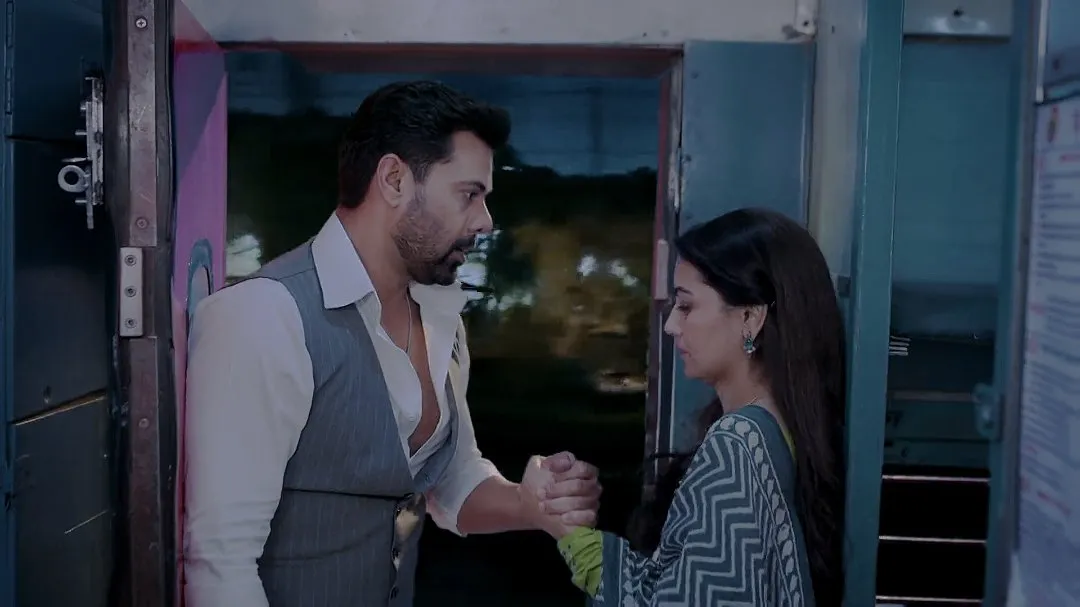
As the scene shifts to the railway station, the tension shifts from internal to external. Aparajita appears like a woman possessed by a need for freedom, her eyes darting around as if a shadow is chasing her. The high-pitched whistle of the train mirrors her internal panic. In a moment of pure adrenaline, she attempts to board the moving train, nearly slipping into the gap. It is Rakshit who appears like a guardian, pulling her to safety. Their first real eye-lock is intense, framed by the rhythmic chugging of the train and the haunting realization that their lives have just been irrevocably intertwined. Behind them, a mysterious man lingers—a remnant of Aparajita’s past with Lalit—hinting that her escape might not be as clean as she hopes.
The transition to the interior of the train brings a shift in tone. Now sharing a coupe, the two strangers are forced into a proximity that breeds vulnerability. Rakshit, acting as the “green flag” hero modern audiences crave, questions her reckless boarding. Aparajita’s response is simple yet gut-wrenching: “Sometimes it becomes necessary to leave certain places.” Her exhaustion is palpable, and when her phone rings, her visible tremor tells a story of trauma that Sriti Jha portrays with incredible nuance. It is clear that while she has physically left her past, the emotional shackles are still very much intact.
Also Read: Oh Humnava Tum Dena Saath Mera 21 April Written Update: Rakshit’s Arrival Sparks Family Chaos!
The episode takes a remarkably progressive turn during the second half of the journey. In a scene that has earned the show immense praise for its “modern sensibilities,” Aparajita faces a medical and personal emergency. Feeling dizzy and experiencing physical discomfort, she nearly collapses again, and once more, Rakshit is there to catch her. However, the true highlight is his observant nature. Recognizing her silent plea for help to other women in the compartment, Rakshit discreetly understands she needs menstrual supplies. Without making her feel awkward or drawing attention to her vulnerability, he uses technology to his advantage, ordering what she needs to the next station.
This leads to a beautiful “role reversal” moment. To collect the parcel, Rakshit has to jump off the train and run to get back on as it starts moving. This time, it is Aparajita who reaches out, her hand extending to pull him back into the carriage. As he hands over the parcel with a respectful nod, the emotional stakes of the show skyrocket. Aparajita’s internal monologue captures the essence of the scene perfectly: she reflects on how some men understand everything without a word, while others never understand even after a lifetime of explanations. It is a direct jab at her past and a soaring tribute to Rakshit’s character.
As the train pulls into Indore the following morning, the atmosphere is heavy with the “what ifs” of a missed connection. Aparajita wakes to find her savior preparing to leave. She hasn’t even learned his name, yet she keeps his pen—a small, silver keepsake of the man who saved her twice in one night. She watches from the platform as he rides away on horseback, his driver mentioning a “waiting bride.” The irony is sharp; just as she finds a man who respects her, he appears to be moving toward a commitment of his own. Her shout of “Seat number 16!” is lost to the wind, leaving her alone on the platform.
The final moments of the Oh Humnava Tum Dena Saath Mera 20 April 2026 Written Update take us to the doorstep of Aparajita’s childhood home. Standing before the door she once called her world, she is a woman caught between two lives. Having sent a letter to her parents about her failed marriage, she doesn’t know if she will be met with open arms or closed hearts. However, remembering Rakshit’s words about facing one’s problems rather than giving up, she finds the courage to ring the bell. The screen fades to black on her expectant face, leaving the audience breathless for tomorrow’s episode. This premiere didn’t just tell a story; it set a mood of hope, making it a must-watch for anyone who believes in the power of second chances.
